
Market Hours and Sessions
Markets never truly sleep. As New York closes, Tokyo opens. As Tokyo closes, London opens. As London closes, New York opens again. This rotation creates distinct trading sessions with different characteristics, different volatility, different liquidity, different opportunities. Knowing when markets are active is not just trivia. It affects your fills, your spreads, and your probability of success.
Financial markets follow the sun around the globe through 3 major sessions. The Asian Session with Tokyo and Sydney opens at 6:00 PM ET for Sydney and 7:00 PM ET for Tokyo, closes at 4:00 AM ET, and includes major markets like Tokyo Stock Exchange, Hong Kong, Shanghai, Singapore, and Sydney. The European Session with London and Frankfurt opens at 3:00 AM ET, closes at 12:00 PM ET, and includes major markets like London Stock Exchange, Frankfurt, Paris, and Zurich. The American Session with New York opens at 8:00 AM ET for pre-market and 9:30 AM ET for regular hours, closes at 4:00 PM ET for regular hours and 8:00 PM ET for after-hours, and includes major markets like NYSE, NASDAQ, CME, and ICE. The transitions between sessions create overlap periods, times when 2 major regions trade simultaneously. These overlaps typically see the highest volume and most significant moves.
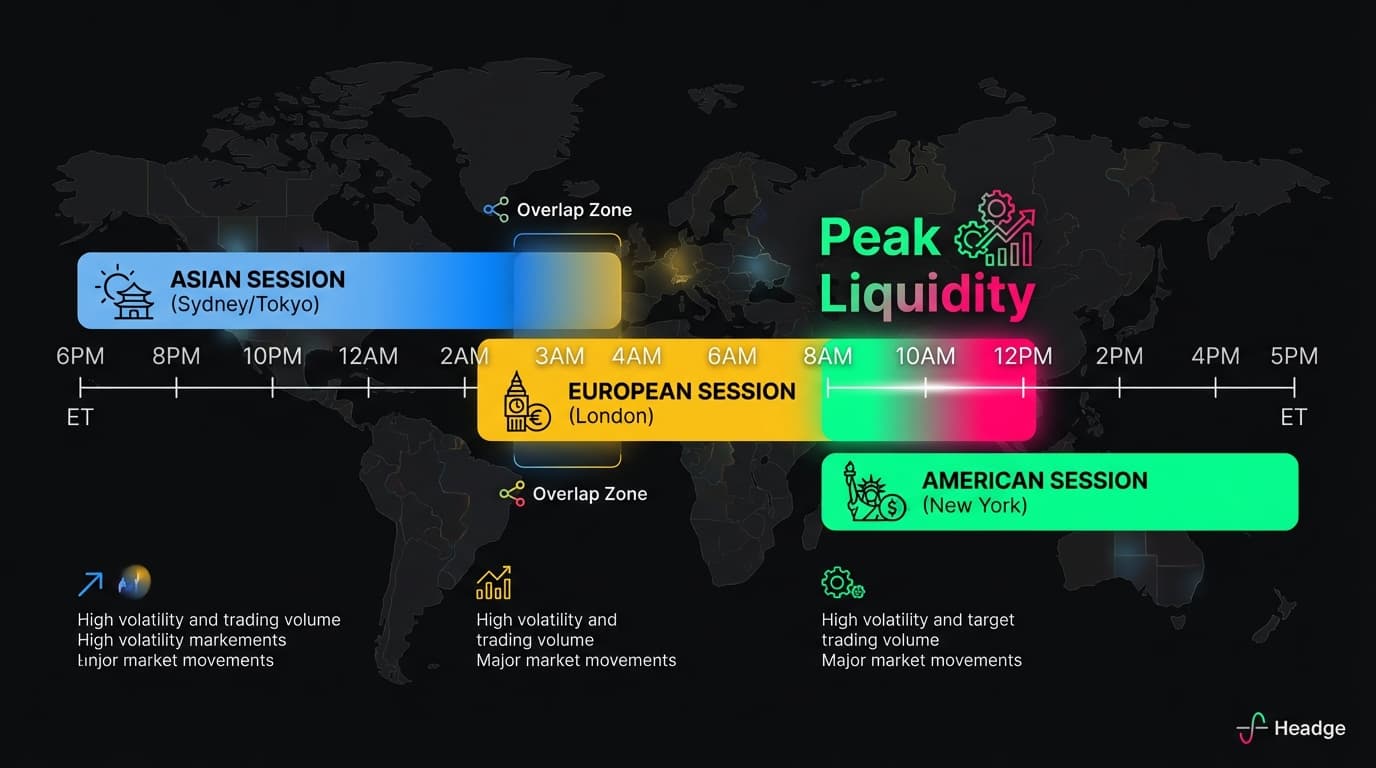
Each session has a personality. The Asian session is typically the quietest for Western instruments. EUR/USD might range 30 to 40 pips compared to 80 to 100 pips during London. S&P futures often drift sideways. But for Asian instruments, this is prime time. USD/JPY sees its biggest moves. Nikkei futures are most active. Chinese and Hong Kong stocks trade. Australian economic data releases. The session often sets up for the European open. Ranges established during Asia become breakout targets when London wakes up.
London is the world's financial capital for foreign exchange and a major hub for equities and commodities. The European session typically sees highest forex volume of the day, major moves in EUR, GBP, and CHF pairs, European equity indices like DAX, FTSE, and CAC at peak activity, commodity markets waking up, and UK and Eurozone economic data releases often at 3:00 to 4:00 AM ET. The first 2 hours of London, 3:00 to 5:00 AM ET, often establish the day's direction. Breakouts from Asian ranges frequently occur here.
The US session brings the deepest liquidity for most instruments. US equities at peak volume, S&P and Nasdaq futures most active, US economic data releases typically at 8:30 AM ET, Fed announcements at 2:00 PM ET when scheduled, and commodity markets fully active. The US session tends to be most volatile in the first 2 hours, 9:30 to 11:30 AM ET, and often sees a secondary move around 2:00 to 3:00 PM ET.
The London-New York overlap from 8:00 AM to 12:00 PM ET sees the highest combined volume across forex, futures, and equities. If you can only trade 1 period per day, this is it. Both major financial centers are active, liquidity is deepest, and spreads are tightest.
Different instruments have different optimal trading times. US stocks have pre-market from 4:00 AM to 9:30 AM ET with thin liquidity until 8:00 AM, regular hours from 9:30 AM to 4:00 PM ET with full liquidity, and after-hours from 4:00 PM to 8:00 PM ET with thin liquidity. Most volume concentrates in the first hour, 9:30 to 10:30 AM, and last hour, 3:00 to 4:00 PM, of regular trading. Extended hours have wide spreads and gaps are common. US index futures like ES, NQ, and YM trade on Globex from 6:00 PM to 5:00 PM ET next day, nearly 24 hours, with a maintenance halt from 5:00 PM to 6:00 PM ET daily. Regular session is 9:30 AM to 4:00 PM ET. Optimal trading is during regular session, especially the open and close. Futures trade nearly around the clock, but liquidity during Asian hours is much thinner than during US hours. Major moves can happen overnight on international news.
Forex pairs trade 24 hours from Sunday 5:00 PM ET to Friday 5:00 PM ET with no daily close. Optimal hours depend on the pairs. EUR/USD and GBP/USD work best during London and London-NY overlap. USD/JPY works best during Tokyo and early London. AUD/USD works best during Sydney and early Tokyo. Spreads widen during session transitions and on weekends, some brokers offer weekend trading with wide spreads. Crypto trades 24/7 365 with no breaks. Unlike traditional markets, there is no official sessions, but volume patterns still exist. US hours typically see highest volume. Weekends can be volatile with no traditional markets to compete for attention. Major moves can happen any time, 3:00 AM Sunday is as valid as Tuesday afternoon.
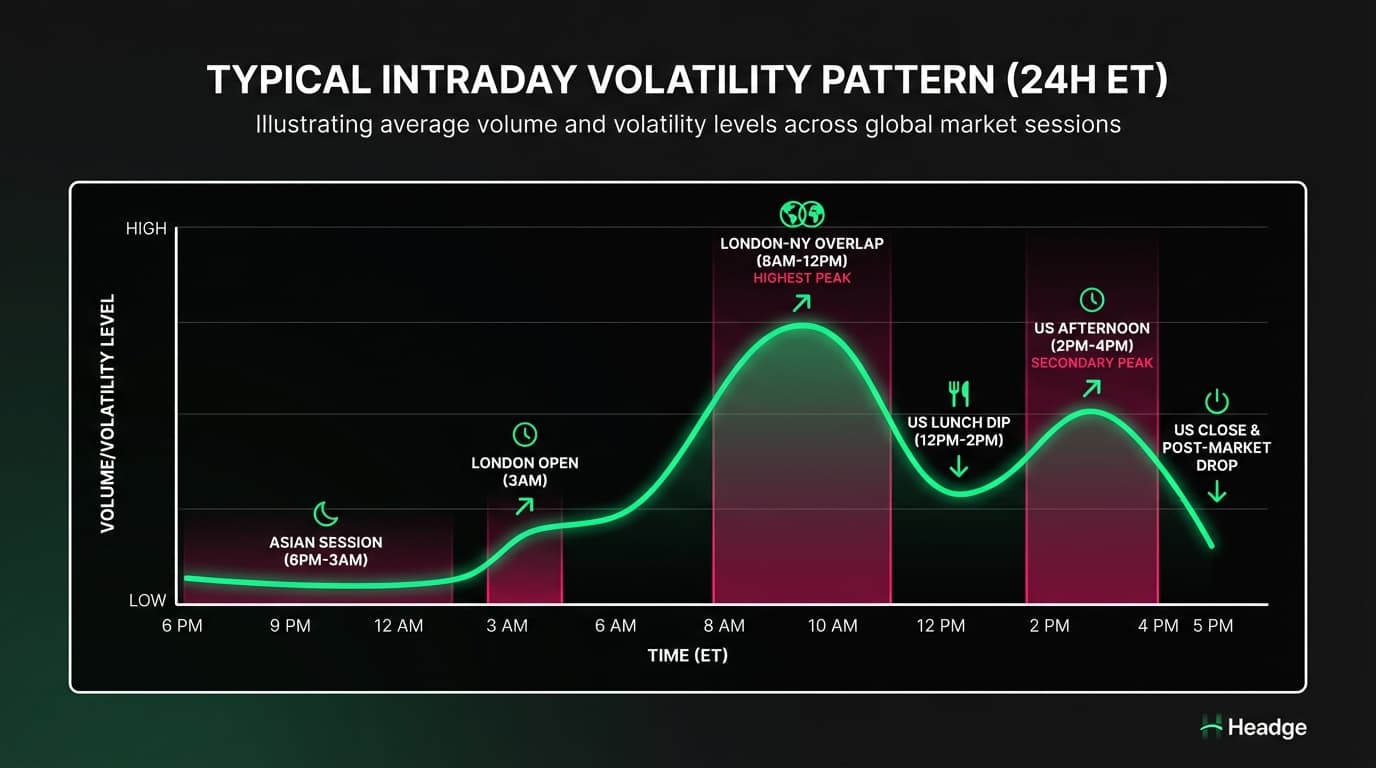
Market-moving economic data releases follow schedules. US data typically releases at 8:30 AM ET, including non-farm payrolls monthly on the first Friday, CPI and PPI inflation data, GDP releases, and jobless claims weekly on Thursday. European data typically releases at 3:00 to 4:00 AM ET, including ECB rate decisions, German and EU economic data, and UK data. Asian data releases during Asian hours, including Bank of Japan decisions, Chinese economic data, and Australian employment and RBA decisions. Around major releases, spreads widen, volatility spikes, and slippage increases. Some traders specifically trade these events, others avoid them entirely.
Keep an economic calendar visible when trading. Even if you do not trade the news directly, knowing when high-impact releases are scheduled prevents getting caught off-guard by sudden volatility. Services like Forex Factory, Investing.com, or your broker's calendar show upcoming events with expected impact ratings.
For best execution and tightest spreads, trade during the primary session for your instrument, prefer overlap periods for forex, and avoid session transitions and holiday-thinned markets. For volatility and opportunity, the first 1 to 2 hours of any session tend to be most active, major data releases create volatility if you are prepared for it, and session overlaps combine liquidity with volatility. For liquidity gaps to avoid, there is 5:00 to 6:00 PM ET for futures maintenance, Friday afternoon for weekend positioning and reduced activity, holidays like Christmas week and August in Europe, and between session closes and opens. Dangerous periods to avoid include immediately before major scheduled news, during FOMC announcements if not specifically trading them, and when spreads are visibly wider than normal.
Your trading style should match your available hours. If you can only trade Asian session, focus on JPY pairs, AUD/NZD, or crypto. Avoid expecting big moves in EUR/USD. If you can only trade US session, you have access to the deepest liquidity. Stock indices, most forex pairs, and commodities all work well. If you trade around a day job, the London-New York overlap from 8:00 AM to 12:00 PM ET before work or the first hour of US trading gives you the best conditions in a limited window. If you swing trade, session timing matters less because you are holding through multiple sessions. Focus on daily levels and ignore intraday session noise.
2 practices separate professional traders. Think in market time. US traders should know what 3:00 AM ET and 7:00 PM ET mean for market activity, even if they never trade those hours. European traders should internalize US Eastern time for data releases. Respect your time zone. If you are in California, the optimal trading window from 5:30 AM to 8:30 AM PT requires waking early. If you are in London, US data releases at 1:30 PM might hit during lunch. Build your schedule around market hours, or accept you are trading suboptimal conditions. The markets do not adjust to you. You adjust to them, or you accept wider spreads, thinner liquidity, and less predictable behavior.
Finally, I will discuss how to choose which markets to trade based on your capital, style, and goals.