
Set and Forget Done Right: Automation Boundaries and Manual Oversight
Define what your bots handle and when you step in. Build alerts, circuit breakers, and a review routine to keep automation disciplined and safe.

Headge Team
Product Development
Why set and forget needs guardrails
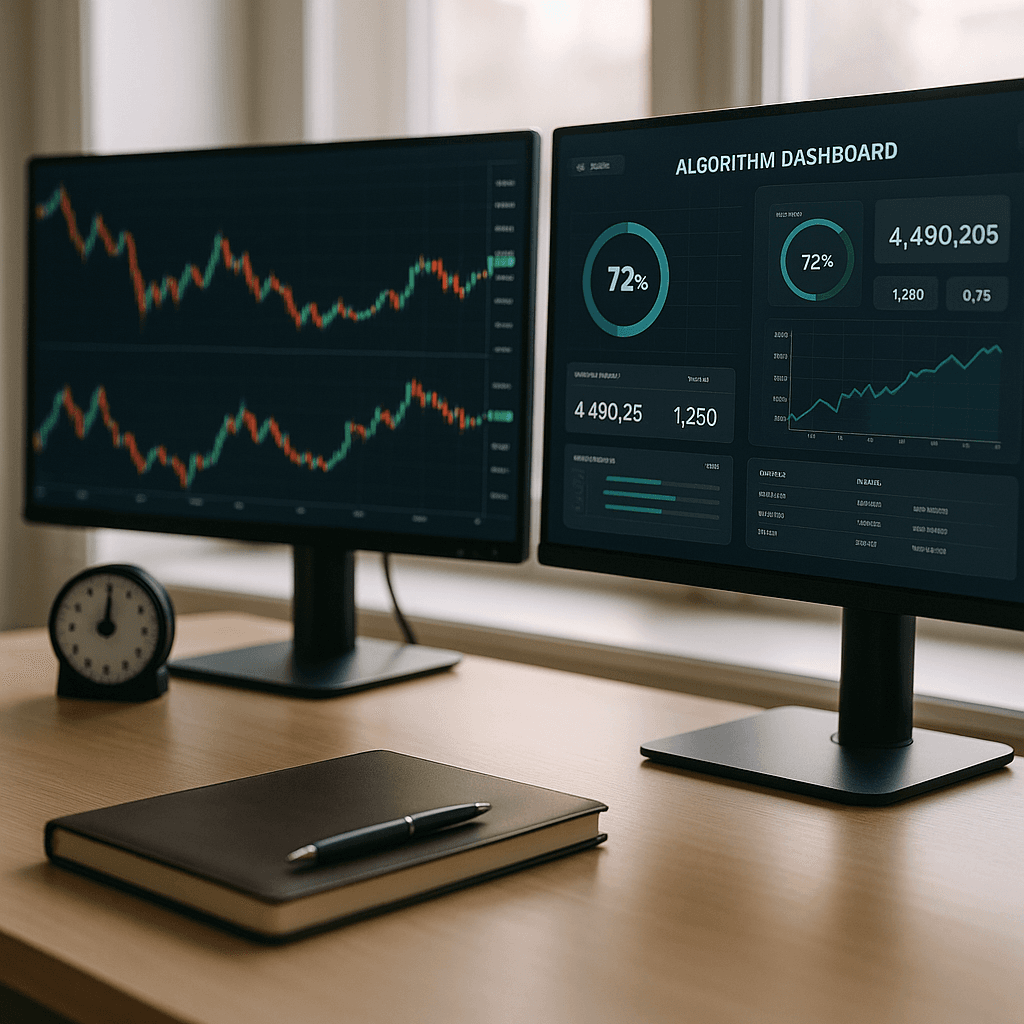
Automation removes execution friction, speeds reaction time, and enforces position sizing without the heat of the moment. It also introduces new psychological risks. Traders may over-trust a model, neglect monitoring due to vigilance fatigue, or intervene impulsively in a drawdown. Research in human factors shows that humans are poor at passive monitoring and tend to either disengage or overreact to noise once engaged. A sound process sets clear boundaries for what the bot decides and what the human supervises, then measures whether those boundaries hold under real market stress.
The goal is not to micromanage entries but to structure oversight where human attention has the highest marginal value. This shifts energy from watching every tick to shaping the conditions in which the automation is allowed to act.
Define the automation boundary
The automation boundary is the contract between system and supervisor. It answers two questions: what the bot can do without permission, and what events force a human decision. Write this boundary in plain language and treat it as rules of engagement. Typical elements include what markets and hours the bot trades, the maximum exposure per symbol and account, the risk per trade, and the data the bot depends on.
A practical boundary is crisp and testable. If a limit is exceeded, the action is binary: pause the system, reduce size, or stand aside. Soft boundaries invite rationalization. Clarity enhances discipline because it becomes easier to recognize and report violations.
Pre-session health checks
A short, repeatable pre-session routine reduces avoidable errors. Borrowing from safety-critical fields, checklists catch simple failures before they escalate. For an automated system, the baseline health check covers data feed status, clock synchronization, broker connectivity, order permissions, and current positions versus the system ledger. A 2 minute review of pending orders against the rule set often reveals drift, such as stray orders left from maintenance or a stale price cache.
Include a permission-to-trade line at the end: trade allowed yes or no. If no, state the reason and the fix. This reduces ambiguous starts that later justify ad hoc overrides.
Circuit breakers and alert ladders
Circuit breakers are hard stops on conditions that degrade system reliability or threaten capital disproportionately. They should be simple, observable, and automated wherever possible so that action does not depend on perfect attention. Three common breakers are:
- Daily loss stop at the portfolio level when realized and open loss exceed a defined multiple of average daily variance
- Slippage or reject-rate threshold that signals impaired execution quality
- Data integrity check that halts trading on missing or stale ticks beyond a short timeout
When a breaker trips, the default action is pause. The trader reviews logs, market conditions, and recent changes before resuming. This avoids the costly pattern where a model trades its best during stable conditions and its worst when market plumbing becomes unreliable.
Alert ladders move the trader from passive to active oversight via graduated cues. Early alerts are informational and routed to asynchronous channels. Higher tiers escalate to immediate attention and include a recommended action. For example, tier one alerts on volatility regime shifts, tier two on abnormal correlation across positions, and tier three on execution anomalies. The structure avoids a single firehose channel that produces alert fatigue.
Oversight cadence and vigilance management
Humans struggle to sustain watchfulness without feedback. Rather than stare at screens, schedule brief, deliberate sweep checks. Two or three short audits spaced through the session often outperform continuous low-quality monitoring. Each audit has a fixed order: review breaker dashboard, scan active positions against maximum risk, confirm orders align with system state, then log a one-line status. Time-box each sweep to a few minutes to reduce drift into discretionary tinkering.
The evidence from attention research is clear. Monitoring performance decays without discrete tasks and clear stop points. Turning oversight into a short, scored ritual preserves energy and keeps the trader responsive to real signals.
Intervention protocol that protects edge
Interventions are most harmful when they are impulsive, unlogged, or motivated by discomfort rather than evidence of regime mismatch or malfunction. Classify interventions into a small taxonomy: technical fault, market structure change, rule mis-specification, or trader anxiety. Only the first three justify changes to live behavior. Anxiety requires a posture change such as stepping aside, not editing orders inside the position.
A simple protocol improves decision quality. When an alert triggers, pause new entries. Write a 1 sentence hypothesis that states the problem and the intended action. Check one corroborating signal. Resume only when the condition clears or the change is implemented. This keeps overrides from becoming a string of improvisations.
Two brief examples:
A latency spike drives slippage far above baseline. The system hits the slippage breaker and pauses. The trader confirms broker status and internet stability, then reduces max order size for the session and resumes. The journal notes the cause, action, and post-fix slippage.
A news shock widens spreads in a symbol outside the model’s calibration window, but no technical fault is detected. The trader resists widening stops mid-flight. Instead, new entries are paused in that symbol until spreads normalize according to a predefined measure. Existing positions are managed by the model as designed.
No-touch windows and allowed edits
Discretion inside trades often degrades expectancy. Define no-touch windows around entries and exits where manual edits are not allowed unless a breaker or integrity rule is hit. When edits are permitted, limit them to a small menu such as flatten all, halve size, or pause new orders. Each allowed action is reversible only through the same protocol, not by nibbling.
This is a form of implementation intention from behavior research. If X happens, do Y, not think about Y. It reduces choice overload at the moment of stress and reduces regret-driven oscillation.
Position and exposure caps that scale with uncertainty
Position caps should adapt to structural uncertainty. A simple scheme links per-trade risk and total exposure to realized volatility and liquidity conditions. When spread or depth metrics degrade, caps step down automatically. This reduces the need for the trader to manually throttle the system in turbulent microstructure and keeps overrides rare.
Equally important is a boredom cap. When realized opportunity is low, overfitting behavior emerges. Hard coding a minimum variance threshold below which the bot does not trade helps prevent noise harvesting. The psychology is straightforward. A quiet tape invites meddling unless the system is not permitted to engage.
Journaling automation decisions
An automation journal is separate from the trade log. It captures decisions about the system itself. Use a compact template so recording takes less than a minute. Key fields:
- Trigger type and time window
- Action taken relative to boundary rules
- Expected impact on risk and expectancy
Adding one field for whether the intervention would have helped or hurt in out-of-sample backtests is valuable when available. Over time, the journal reveals the signature of helpful oversight versus noise chasing. The target is not zero interventions but a low, stable rate with positive expectancy contribution.
A weekly scorecard that keeps both sides honest
Scorecards turn reflection into measurement. Compare automation-only outcomes with actual outcomes that include human touches. The simplest view tracks win rate, average R per trade, tail losses, and the percentage of overrides that improved PnL after fees and slippage. Add operational metrics such as alert count, breaker trips, time to detection, and time to recovery.
A short rubric for interpretation helps:
- If overrides are frequent and neutral, boundaries are unclear
- If overrides are rare but negative, vigilance is reactive rather than rule based
- If overrides are rare and positive, the oversight is focused on true failure modes
Use moving averages over several weeks because single-week noise is high. Stable differentials indicate genuine edge in supervision rather than luck.
Handling losses without fighting the system
Automated strategies experience clustered losses. The danger is a mid-cluster discretionary edit that clips the positive skew the model depends on. The boundary should state that clusters within the historical drawdown envelope do not invite edits. Drawdown breakers should reflect distributional risk, not comfort. If discomfort is acute, the appropriate action is pause and flat, not partial edits that contaminate the sample of trades. This distinction preserves analytical clarity in the journal and keeps post-trade review clean.
When a breaker forces a stop, debrief with the same discipline. Document the root cause, the human signal that detected it, and the new or adjusted rule that would have prevented recurrence. This turns losses into rule improvements instead of narratives.
Wednesday rhythm tip
Midweek is ideal for a boundary audit. On Wednesday, run a 10 minute check: confirm that all limits in the automation contract match live configuration, sample two trades to verify that executed risk and slippage match design, and scan the journal for any creeping discretionary edits. If drift is found, reset now rather than waiting for the weekend. Small midweek corrections protect the remainder of the cycle.
Putting it together
Set and forget is not abdication. It is a division of labor between code and human attention. The system handles repeatable execution under known conditions. The trader designs the environment, watches for boundary violations, and refines the rules through structured evidence. The combination is durable when the boundaries are explicit, the alerts are layered, the oversight is scheduled, and the journal ties action to outcome. In that frame, discipline becomes lighter because the hard decisions were already made outside the heat of live markets.
James Strickland
Founder of Headge | 15+ years trading experience
James created Headge to help traders develop the mental edge that strategy alone can't provide. Learn more about Headge.
Ready to build your mental edge?
Meditation and mindfulness techniques designed specifically for traders. Build the discipline and emotional resilience you need to perform at your best.
