
Handle Midday Trading Fatigue: Micro Naps, Breaks, and Nutrition
Beat the lunchtime slump with research-informed micro naps, structured breaks, and smart nutrition to sustain attention, discipline, and decision quality.

Headge Team
Product Development
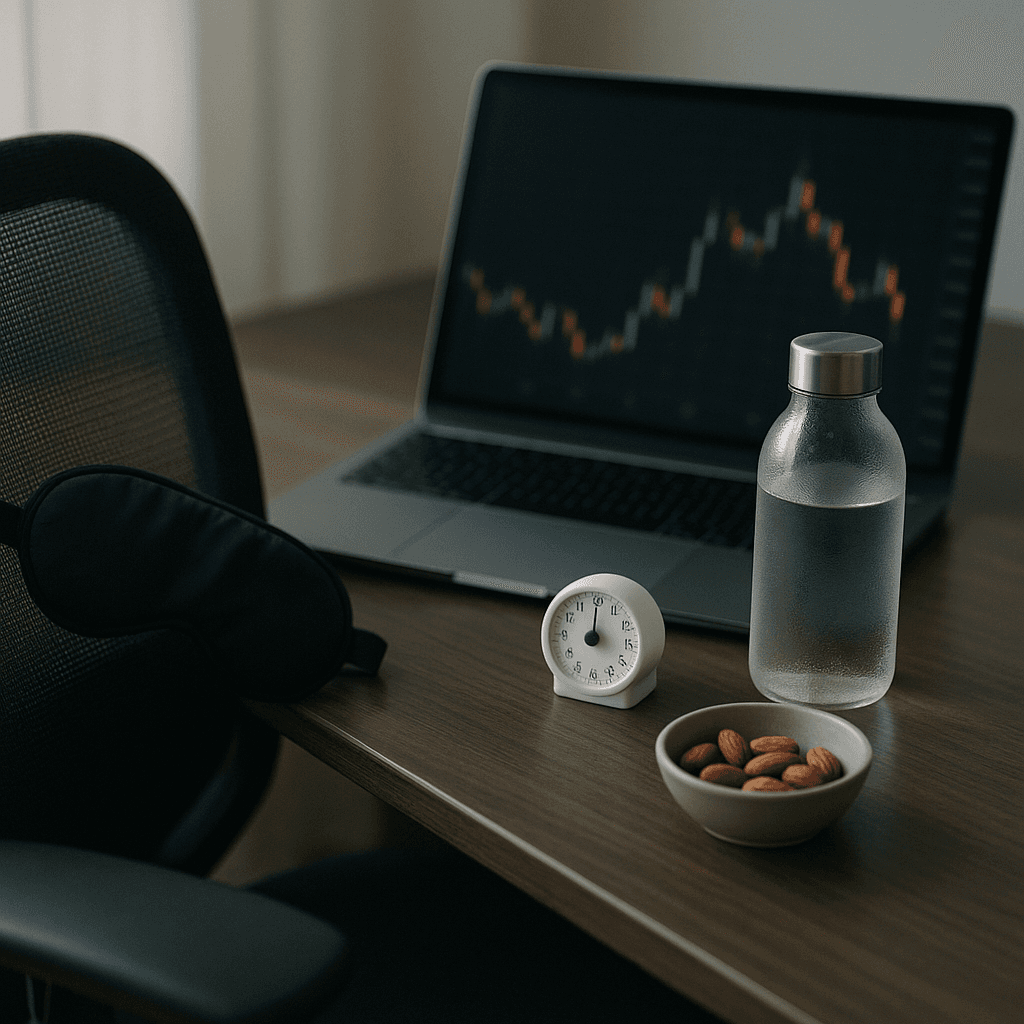
Midday fatigue often arrives silently and then reshapes the risk profile of every decision. In markets that punish slow reaction time and imprecise judgment, the post-lunch dip is not just uncomfortable. It is costly. A deliberate plan for short rest, strategic breaks, and nutrition protects attention and stabilizes discipline when liquidity is still present but self-control is not.
Why midday fatigue hits
Human alertness follows several biological rhythms. Many traders feel a predictable dip in early afternoon, a circadian valley that pairs with ultradian cycles of about 90 minutes. As cognitive effort accumulates through the morning, focus narrows, working memory saturates, and small lapses grow more frequent. Research on sustained attention shows that even modest sleep restriction or dehydration can degrade reaction time and error monitoring. Studies on decision fatigue are mixed about the mechanism, yet there is consistent evidence that long, continuous control tasks produce more impulsive choices and lower threshold for risk.
Trading is a sustained control task. The mind filters noise, inhibits urges, and updates probabilities under time pressure. It is not surprising that the system tilts toward speed over accuracy when energy drops. The solution is not more willpower. It is a routine that restores resources before the slump distorts behavior.
Micro naps that sharpen decisions
A short mid-day nap can restore alertness without grogginess when kept brief. Laboratory work shows that 10 to 20 minutes of sleep reduces subjective sleepiness and improves vigilance, often within minutes of waking. Past 30 minutes, sleep inertia is more likely, which can impair performance for a short period. The practical implication is simple: cap rest to a true micro nap.
Timing matters. A nap taken in the early afternoon aligns with the natural circadian dip. Many traders find success starting between 12:30 and 1:30 local time, after the morning session has settled and before late-day catalysts.
The caffeine nap is a useful variant. Caffeine begins to take effect roughly 20 to 30 minutes after consumption and has a half-life of several hours, with large individual differences. Drinking a small coffee or tea just before a 15-minute nap can combine the restorative effect of sleep with the rising alertness from caffeine on wake. Keep total caffeine moderate and avoid doses later in the afternoon to protect nighttime sleep.
Implementation is straightforward. Prepare a quiet space, recline or lie down, use an eye mask if light is intrusive, and set a reliable timer for 15 to 20 minutes. On waking, stand up immediately, take a short walk or a few light mobility movements, and get a minute of daylight at a window or outdoors to resolve any inertia. If a nap consistently interferes with nighttime sleep, shorten it or replace with a non-sleep rest protocol that involves eyes-closed breathing and progressive relaxation for 8 to 10 minutes.
Consider the nap a performance tool, not a crutch. If morning sleep is chronically restricted, a nap helps but will not fully restore complex decision capacity. The more durable fix is adequate nightly sleep.
Breaks that preserve precision
There is strong support for the value of micro breaks during cognitively demanding work. Short, frequent pauses prevent attentional drift and reduce musculoskeletal strain. Rather than waiting until the slump becomes obvious, schedule breaks proactively at the end of a focus block.
A practical window is 45 to 90 minutes of focused trading followed by 3 to 5 minutes of stepping away from the screen. Breaks should change posture and visual focus. Standing, walking to a window, and soft eye focus at long distance all interrupt the near-field load from charts. Movement increases arousal via noradrenergic systems and often resets mind wandering.
Breathing drills also help. Brief protocols such as a double inhale through the nose followed by a long exhale through the mouth can reduce physiological arousal in under two minutes. Many traders prefer box breathing with equal counts because it is easy to remember. The goal is not sedation. It is re-centering, so that the next block begins with controllable energy rather than jitter.
Guard the phone during breaks. Social feeds, chat rooms, and headlines introduce cognitive load and emotional volatility. Breaks that add stimulation rarely restore attention.
Nutrition that sustains attention
Lunch choices affect the slope of alertness in the next two hours. Meals that are large, high in refined carbohydrates, or heavy in fat tend to increase sleepiness for many people due to postprandial physiology and the demands of digestion. Research on glycemic load indicates that smaller, balanced meals with fiber and protein produce more stable energy and fewer lapses.
A practical template is lean protein, vegetables, and a moderate portion of slow carbohydrates such as whole grains or legumes. Examples include grilled chicken with mixed greens and quinoa, tofu with stir-fried vegetables and brown rice, or Greek yogurt with berries and oats if a lighter option is needed. If trading continues across the afternoon, keep portion sizes moderate. Large, celebratory lunches belong after the session, not during it.
Hydration is often overlooked. Even mild dehydration near two percent of body weight can degrade cognitive performance. Keep water visible and within reach. Adding a small amount of electrolytes can help if the office is warm or if coffee intake is high. Monitor the practical signal: if thirst is frequent or urine is consistently dark, hydration is inadequate.
Caffeine strategy matters. Many traders benefit from front-loading caffeine in the morning and tapering by early afternoon. This respects its long half-life and protects sleep. Across the day, smaller doses outperform large spikes for steady attention. Pairing caffeine with a high-protein snack can blunt jitters. Some use L-theanine alongside caffeine to reduce edginess, but individual responses vary and any supplement should be tested cautiously on non-trading days.
Smart snacks prevent the classic crash. A piece of fruit with nuts, whole-grain crackers with hummus, or yogurt offers glucose without a surge. Sugary pastries deliver fast comfort and then a trough that coincides with the most expensive part of the day.
Build a midday energy playbook
Convert these principles into a simple schedule. Trade the morning in one or two focus blocks. When volume thins and attention begins to fray, break by design, not by failure. If the session demands staying engaged through lunch, plan a 15-minute micro nap at a consistent time, followed by 3 to 5 minutes of daylight and a light, balanced meal. Resume with a smaller position size or stricter entry criteria for the first 20 minutes while attention stabilizes.
Set an energy threshold. Before resuming, rate alertness on a simple 1 to 10 scale. If the score is below a predetermined line, switch to lower-risk tasks such as scanning, updating levels, or writing the post-trade review instead of initiating new positions. A rule that ties risk to state prevents a single low-energy decision from undoing a day of discipline.
An illustrative example: a short-term equity trader schedules a 12:35 micro nap for 15 minutes, followed by a brief walk and a yogurt bowl with berries and seeds. The trader logs an energy score of 7 on return, trades half size for the first 30 minutes, and then restores full size if the score remains stable and performance is clean. Over several weeks, impulsive midday entries decline and the quality of exits improves, visible in the journal as fewer regret notes and a smaller variance in trade execution times.
Journal and scorecard to keep it objective
Tracking brings structure. The goal is to connect state with outcomes and remove guesswork. In the daily journal, include an energy rating before the midday plan, immediately after the nap or break, and at market close. Note lunch composition, caffeine timing, and any hydration gaps. Add two behavioral metrics: number of rule breaks and number of trades taken outside plan. These markers reflect fatigue more reliably than P&L, which can be noisy.
A simple scorecard makes this visible across weeks. For each day, log the nap duration and start time, break adherence, lunch type, hydration estimate, and post-lunch latency from signal to action. Many trading platforms export timestamps that make this easy. Over time, patterns emerge: a 25-minute nap may correlate with sluggish restarts, a heavy lunch with higher variance in execution, or a consistent caffeine cut-off with cleaner late-day decisions.
When a change works, codify it into the routine. This shifts self-care from ad hoc to process, the same way a technical setup becomes a documented playbook once it proves itself.
Common pitfalls and safeguards
Avoid drifting past the nap limit. A timer and an eye mask help distinguish a planned reset from a couch nap that blunts the afternoon. Protect nighttime sleep by finishing caffeine early and setting the nap before mid-afternoon. Resist stacking stimulants when the market heats up; jitter undermines fine motor precision with order entry and slows accurate reading of tape.
Watch the boundary between boredom and fatigue. Boredom tempts unnecessary trades. Fatigue tempts fast trades. In both cases, the safeguard is a minimum condition for taking risk: energy above threshold, a validated setup, and adherence to size rules. If the state fails the first condition, there is no trade.
A brief Saturday calibration tip
Weekends are a chance to test nap length and lunch composition without market pressure. On Saturday, run a controlled trial: eat your typical trading lunch, take a 15-minute nap, and measure alertness and reaction to a short cognitive task or reading session afterward. Adjust nap duration or meal balance until the restart feels crisp. Use Sunday to prep the week’s lunches and to set a caffeine cut-off rule in the calendar.
Sustained performance is an energy management problem disguised as a discipline problem. Micro naps, smart breaks, and thoughtful nutrition create the conditions for good judgment to persist into the afternoon. When the routine is codified and tracked, midday fatigue becomes a known variable rather than a silent saboteur.
James Strickland
Founder of Headge | 15+ years trading experience
James created Headge to help traders develop the mental edge that strategy alone can't provide. Learn more about Headge.
Ready to build your mental edge?
Meditation and mindfulness techniques designed specifically for traders. Build the discipline and emotional resilience you need to perform at your best.
