
Build a High-Performance Trading Workspace: Ergonomics, Light, Noise, Temperature
Design a trading environment that protects attention and reduces errors using evidence-based ergonomics, lighting, noise control, temperature, and routines.

Headge Team
Product Development
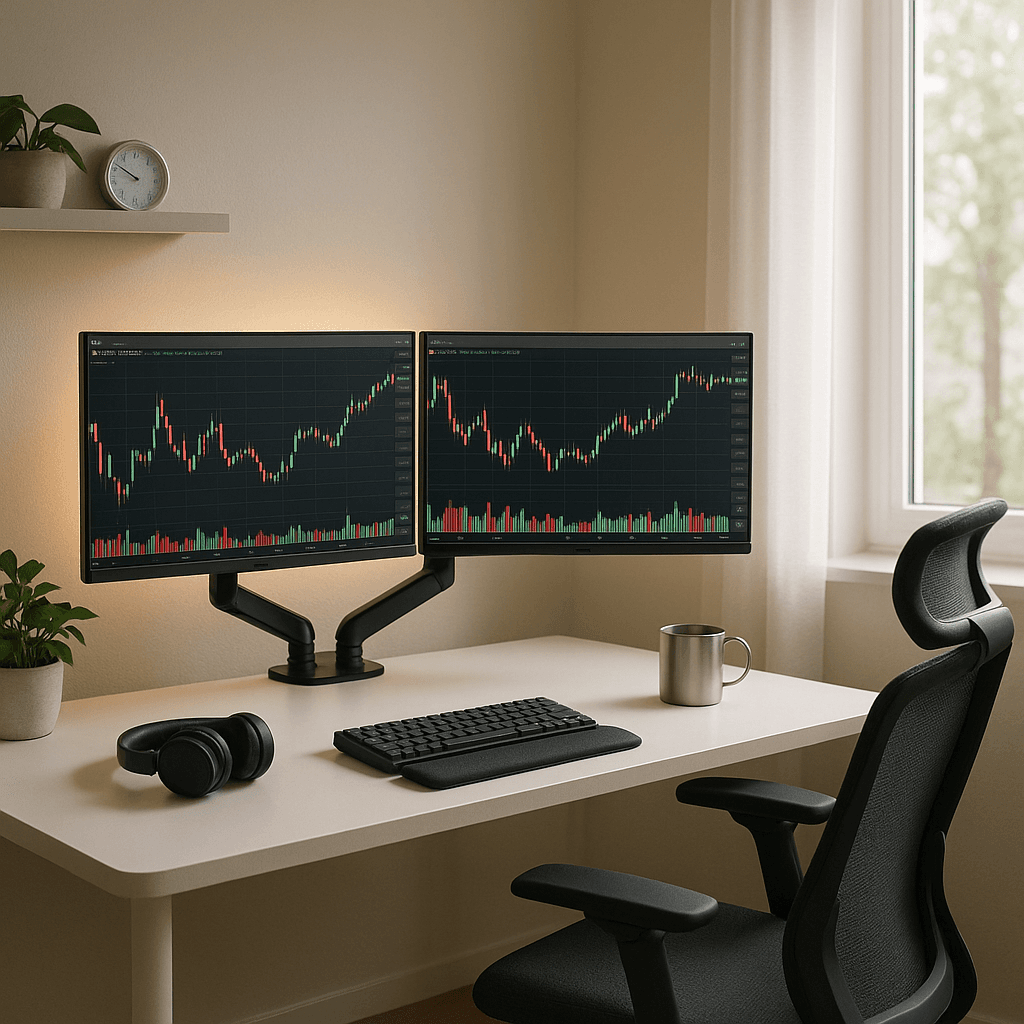
High-quality decisions depend on a stable cognitive state. The trading workstation is not neutral in that process. Research in ergonomics, occupational health, and cognitive psychology shows that posture, light, noise, and temperature shape vigilance, fatigue, and error rates. Designing the environment therefore functions as risk management. The goal is not aesthetic perfection. The goal is to reduce friction on attention and tighten the feedback loop between context and performance.
Why the physical setup matters
Cognitive load theory suggests that unnecessary sensory demands tax working memory and slow pattern recognition. Glare, fan noise, and uncomfortable seating introduce a background drain on attention. In trading, where milliseconds of hesitation or a misread level can change outcomes, reducing this drag is a practical edge. Studies on open office noise, circadian-aligned lighting, and thermal comfort converge on a simple point. Even small improvements in the environment produce measurable gains in accuracy, reaction time, and sustained concentration. That is the same domain that trading taps every minute.
Ergonomics that reduce cognitive load
Ergonomics is about fit between body and task. For screen-based work, neutral joint positions conserve precision and energy. A chair that supports the lumbar curve and a desk height that keeps elbows near 90 degrees reduce shoulder and neck recruitment. Monitors should place the top line of text near eye level, with the center of the screen slightly below it. Typical viewing distance falls between 50 and 70 centimeters, adjusted to font size and visual acuity. Keyboard and mouse positions should keep wrists straight and forearms parallel to the floor.
A sit to stand strategy helps with arousal and circulation. Short standing bouts every hour offset stiffness without forcing constant posture changes. An anti fatigue mat and a modest footrest can make standing periods comfortable enough to sustain. Traders who use hotkeys benefit from a split second saved by stable wrist placement, especially during volatile opens when motor precision and visual scanning must synchronize.
A simple example. During the pre market routine, the chair is adjusted so feet rest flat and knees sit just below hip height. Monitors are aligned so price ladders and level two columns sit at the primary gaze zone, avoiding chin tilt. The keyboard sits close enough to avoid reaching. This makes the default posture compatible with steady breathing, which supports a calmer baseline heart rate during drawdowns.
Lighting that supports vigilance
Lighting affects both visual comfort and circadian biology. Too little light increases eye strain. Too much or poorly directed light creates glare that disrupts saccades and contrast detection. Evidence from office studies recommends diffuse, even illumination for screens and task areas, with higher correlated color temperatures earlier in the day to support alertness.
Place the primary light source to the side of monitors to avoid direct reflections. Use blinds or sheer curtains to soften daylight. A neutral white task light in the 4000 to 5000 K range provides clarity without harshness. Bias lighting behind monitors reduces perceived contrast and eye fatigue. Aim for illuminance on the desk in the range often used for focused office work, roughly 500 to 1000 lux depending on time of day and ambient conditions. Monitor brightness should match the environment. In dim rooms, lower brightness reduces glare and pupillary strain. In bright conditions, a higher setting preserves contrast without washing out charts.
Evening trading requires restraint with blue enhanced light, which can delay sleep onset. Warm the color temperature slightly in the last session of the day if sleep is a priority. If late sessions are rare, it may be better to keep the setup consistent and protect the sleep window by stopping screens earlier, since light timing has a larger circadian impact than small color shifts.
Noise management for decision quality
Noise influences both stress and working memory. Intermittent, unpredictable bursts are more harmful than steady, low level sounds. Research shows that moderate noise impairs complex cognitive tasks, including numerical processing and short term recall. For trading, false alarms and startle responses can cascade into impulsive actions.
Treat the room to reduce harsh reflections. Soft surfaces, curtains, and rugs dampen high frequency noise. Close mechanical hums from fans and hard drives can be relocated or isolated with vibration pads. Noise canceling headphones reduce low frequency rumble. Pink noise or neutral ambient sound can mask sporadic disturbances without drawing attention. Keep overall levels near quiet office standards. Subjectively, conversation in a neighboring room should be muffled enough that words are not discernible.
If the workspace is shared, establish session boundaries. A visual signal, like a small desk light, can indicate live trading to others in the household. Protect the open and the first minutes after scheduled news with a firm no interruption rule. The point is not isolation. The point is to make important minutes predictable so the brain does not waste energy scanning for threats.
Temperature and accuracy
Thermal comfort influences vigilance, fine motor control, and error rates. Studies in office and lab settings suggest that performance degrades when the environment feels even slightly too warm or too cold. A moderate band around 21 to 23 degrees Celsius works for most traders, with personal variation. Cooler rooms often feel more alert but can stiffen hands and neck. Warmer rooms feel relaxed but can slow responsiveness.
Humidity also matters. Very dry air exacerbates eye fatigue. A range around 40 to 60 percent is often comfortable. Place a small digital thermometer and hygrometer on the desk. Adjust with a fan, a quiet heater, or a humidifier when readings drift. The principle is to stabilize the sensory backdrop so the trading system handles market noise, not environmental noise.
Microbreaks and posture cycling
Visual and musculoskeletal fatigue accumulate invisibly. The common 20 20 20 guideline, every 20 minutes look at something 20 feet away for 20 seconds, remains useful. Pair it with micro postural shifts. During a one minute pause between setups, roll shoulders, extend elbows, and relax the jaw. Short eye movements and small stretches are enough to reset comfort without leaving the screen.
A timer is not always necessary. Anchor microbreaks to chart events. For example, after a stop out, before re entry, look away, breathe out slowly, and reset posture. This links risk management to embodied regulation, which reduces the chance of revenge trading driven by accumulated tension.
A pre market environment check
A fast, three point scan keeps the setup consistent. The check takes less than a minute and prevents small issues from compounding into cognitive friction.
- Chair, screen, and input devices encourage neutral posture
- Light is even with no glare on charts and brightness matches ambient
- Noise and temperature sit in a comfortable, stable range
If one item is off, correct it before the first trade. The pre trade checklist is not a ritual for its own sake. It is a control system that raises the baseline quality of the next decisions.
Instrument the workspace and iterate
Measurement turns preferences into data. Free phone apps can estimate lux and decibels. A small sensor provides temperature and humidity. A monthly calibration of monitor brightness keeps things aligned as seasons change. Track how changes alter subjective effort and objective behavior. The relevant outputs are not only P and L. They include reaction time after alerts, frequency of hotkey errors, and how long deep focus is sustained during a trend.
When a change is made, hold it stable for a week. This isolates the effect. Start with the most likely constraint. If headaches or eye strain appear, address light. If shoulders ache by midday, adjust chair height and arm support. If impatience spikes during the open, examine noise and interruptions. The objective is to build a room that disappears while trading.
Integrate environment into journaling and scorecards
Environmental variables deserve a line in the journal. Add fields for light, noise, temperature, and posture quality, recorded as quick ratings. Note any deviations from the usual setup. During review, scan for patterns. Some traders find that high noise correlates with faster exits and smaller winners. Others notice that slightly cooler conditions improve pre market preparation but degrade late day performance as tension accumulates.
A simple scorecard works well. Rate ergonomics, light, noise, and temperature from zero to two. A daily total under six flags a context problem. When the environment score is weak, shrink size or reduce the number of plays. This is not superstition. It is a conditional risk rule tied to cognitive inputs.
An example entry. Pre market, light 600 lux, 4500 K task lamp, no glare. Noise 38 dB with pink noise masking. Temperature 22.5 C, humidity 45 percent. Chair and monitors set. During the open, two quick trades felt clean. After lunch, ambient noise rose from a nearby construction site. The journal marks the rise and the following two trades show tighter stops and premature exits. The fix for tomorrow is to keep headphones on during afternoon sessions and raise masking volume slightly until the workday ends next door.
Troubleshooting common issues
If charts feel washed out and eyes tire early, reduce monitor brightness and add bias lighting rather than pushing brightness higher. If the neck aches, check for chin lift caused by monitors placed too high, then lower them so the top edge sits near eye level. If the right forearm burns during volatile periods, move the mouse closer to the body and test a lighter sensitivity so smaller movements cover the same distance.
When boredom increases and vigilance drops in quiet markets, switch to a short standing interval with a cooler air temperature by one degree. The change in posture and thermal input can refresh alertness without caffeine. If anxiety spikes in noisy sessions, protect the next trade by inserting a one minute sensory reset. Stand up, look to a distant point, and perform three slow exhales before returning to the screen. This pairs physical cues with a return to plan.
Tuesday rhythm tip
Use Tuesdays to recalibrate the workspace. Ambient light shifts across the week as weather changes. Take two minutes before the open to adjust monitor brightness to match current daylight, wipe the screens, and confirm that the task lamp and bias light produce even illumination. Reseat cables and verify that noise masking still covers intermittent street sounds. This small weekly tune keeps the environment aligned with the plan and prevents drift.
A trading edge rarely arrives as a single breakthrough. It is assembled from small, reliable advantages. A stable, well designed environment quietly compounds those advantages into fewer errors, steadier attention, and a more consistent process.
James Strickland
Founder of Headge | 15+ years trading experience
James created Headge to help traders develop the mental edge that strategy alone can't provide. Learn more about Headge.
Ready to build your mental edge?
Meditation and mindfulness techniques designed specifically for traders. Build the discipline and emotional resilience you need to perform at your best.
